- Kamil
- Piling contractors London, Piling in London
- 0 Comments
London’s ground conditions are some of the most varied and challenging in the UK. Dense London clay, made ground, loose gravels, and proximity to existing structures all create situations where standard shallow foundations simply aren’t viable. Bored piling is one of the most widely used methods for getting around these problems – and for good reason.
What is bored piling?
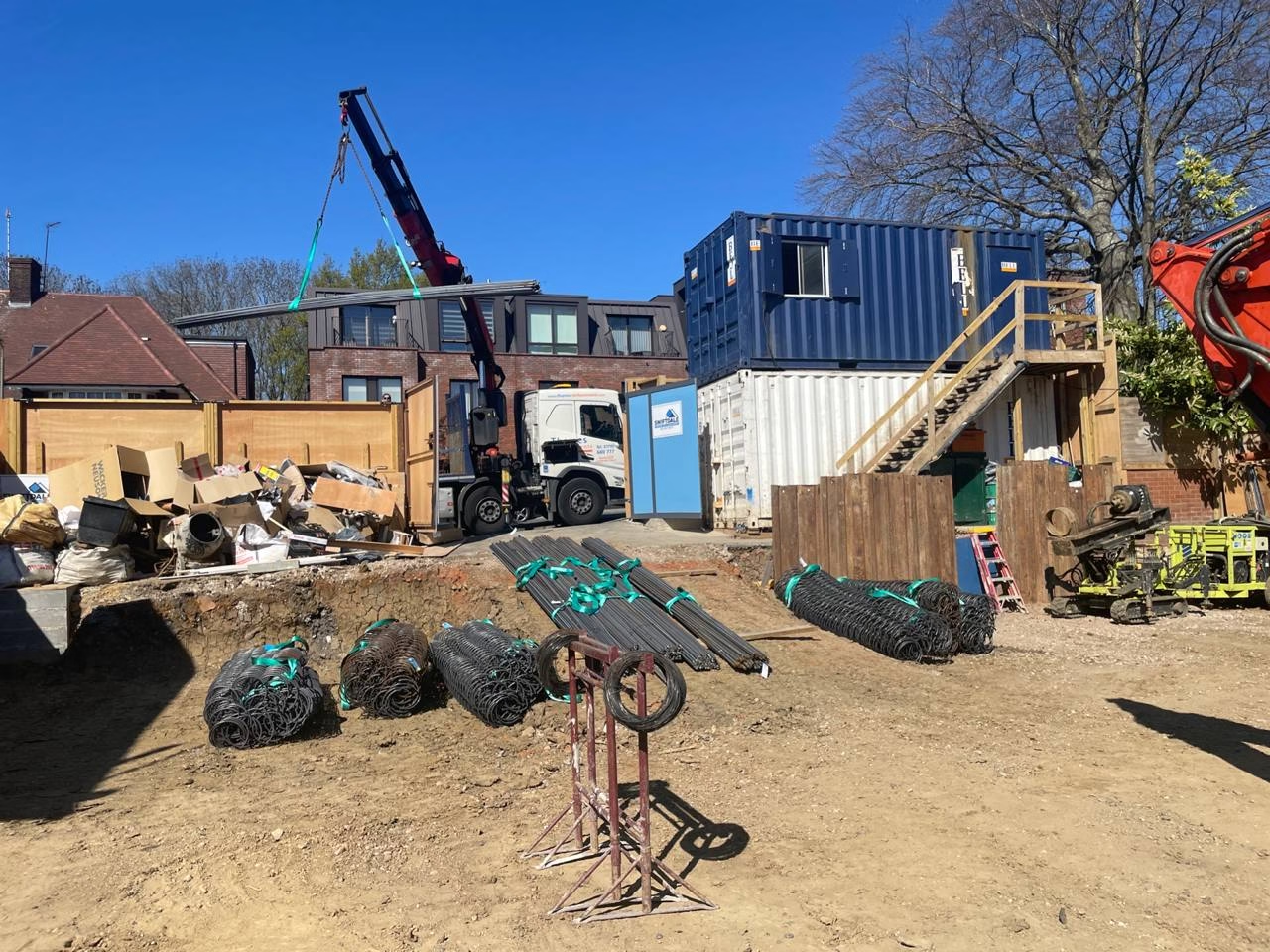
Bored piling involves drilling a hole into the ground, placing a reinforced steel cage inside, and filling it with concrete. The result is a deep, load-bearing pile that transfers structural loads down to a stable layer of soil or rock, bypassing whatever weak or variable material sits above it.
Unlike driven piling, which forces piles into the ground using impact or vibration, bored piling is a low-noise, low-vibration process. In a city like London – where sites are often surrounded by occupied buildings, underground infrastructure, and noise-sensitive areas – that distinction matters.
When is bored piling the right choice?
Bored piling is typically specified when:
- ground conditions are too variable or weak for strip or pad foundations
- the structure requires deep foundations to reach a competent bearing layer
- the site is in a noise or vibration-sensitive area where driven piling isn’t appropriate
- large-diameter, high-capacity piles are needed for a heavy structural load
- the project involves basement construction or retaining walls requiring contiguous or secant pile walls
In London, bored piling is common across residential extensions, basement conversions, commercial developments, bridge abutments, and infrastructure projects. The method scales well – the same principles apply whether you’re piling a rear extension in Clapham or a multi-storey development in the City.
Types of bored piling we carry out
Rotary bored piling
Uses a rotating auger or bucket to excavate the borehole. Suitable for most soil types including London clay, sand and gravel. Used where larger diameters and greater depths are required. See our dedicated rotary bored piling page for more detail.
Continuous Flight Auger (CFA) piling
The auger drills continuously while concrete is pumped through the hollow stem in a single operation. Faster than rotary bored piling, quieter, and well-suited to London clay. Commonly used on residential sites and in areas with tight noise restrictions. More on our CFA piling page.
Cased bored piling
A temporary steel casing is used to support the borehole walls during installation. Used where the ground is loose, waterlogged, or prone to collapse. The casing is withdrawn as concrete is poured.
London soil conditions and bored piling
London’s geology varies significantly within short distances. The most common soil profiles encountered on London construction sites:
- London Clay – the dominant formation across much of south, west and central London. Stiff and consistent, it performs well under bored piles. CFA and rotary bored piling both work effectively here.
- River Terrace Gravels – found along the Thames corridor. Loose and granular, often requiring cased boreholes or CFA to prevent collapse during installation.
- Made Ground – common on previously developed sites across London. Variable in composition and often unpredictable. Ground investigation is essential before pile design.
- Chalk – present in parts of North and East London. Generally good bearing capacity but requires appropriate pile tip design.
Ground conditions directly affect pile diameter, depth, concrete specification and the installation method. We always recommend a ground investigation before finalising pile design.
What’s involved in a bored piling project?
A typical sequence for a residential or small commercial bored piling project:
- Ground investigation – soil samples and trial pits to confirm ground profile and bearing capacity
- Structural design – engineer specifies pile positions, diameters, depths and reinforcement
- Site setup – rig mobilisation, setting out pile positions
- Drilling – borehole excavated to specified depth
- Reinforcement – steel cage placed in the borehole
- Concreting – concrete poured and compacted
- Pile caps and ground beams – structural connection between piles and the building above
- Testing and sign-off – pile records submitted for building control
Bored piling for residential projects in London
The majority of our bored piling work in London is on residential projects – extensions, basements, new builds and underpinning. Restricted access, neighbouring properties, and tight urban plots mean that the choice of piling method and rig size is as important as the pile design itself.
We use compact rigs that can work through standard side passages and in rear gardens with limited headroom. If you’re planning an extension or basement in London, see our pages on mini piling and basement construction for more on how we approach residential work.
Building regulations and compliance
All bored piling work is subject to building regulations approval. We provide full pile records, installation logs and concrete test results for building control sign-off. For more on what’s required, see our guide to building regulations for foundations in London.
If you’re planning a project that requires bored piling in London, contact KHB Piling LTD for a free consultation. We’ll advise on the right method for your ground conditions and structural requirements, and provide a clear, itemised quote based on your engineer’s drawings.
📞 +44 7821 836407 | khbpiling.co.uk

My name is Kamil, and I specialise in piling services in London. I am dedicated to advancing KHB Piling LTD, a trusted contractor delivering high-quality foundation solutions for both residential and commercial projects. With the expertise and commitment of our team, we provide reliable piling services, including mini piling and CFA piling, tailored to meet the unique requirements of each client.