- Kamil
- London basement company
- 0 Comments
Piling in London – Guide to Foundations, Methods and Project Planning
London has some of the most varied ground conditions in the UK. Many sites include made ground, London Clay, historic foundations, old basements, nearby structures and restricted access. In these conditions, piling may be required where standard shallow foundations are not suitable for the proposed structure.
As
piling contractors in London
,
KHB Piling LTD
provides foundation solutions for extensions, basements, new builds and commercial projects across the city. This guide explains when piling may be needed, which methods are commonly used, what affects cost, and what to consider before choosing a contractor.
1. When Might You Need Piling in London?
Piling is often considered when the ground conditions, building load or site layout make shallow foundations unsuitable. Common situations include:
- House extensions on weak or uncertain ground – older properties may have shallow foundations, while new extensions often need a deeper and more stable foundation solution.
- Basement construction – excavation close to or below existing foundations may require
mini piling,
underpinning
or another engineered foundation method. - Variable soil conditions – made ground, clay, fill, groundwater or buried obstructions can affect foundation design.
- Heavier structures – multi-storey buildings, steel frames and larger extensions may require piles to transfer loads to suitable ground.
- Restricted access sites – compact rigs used for
mini piling foundations
can often work where larger piling rigs cannot access the site.
2. Main Piling Methods Used in London
2.1 Mini Piling
Commonly used for: house extensions, basements, underpinning and restricted-access sites.
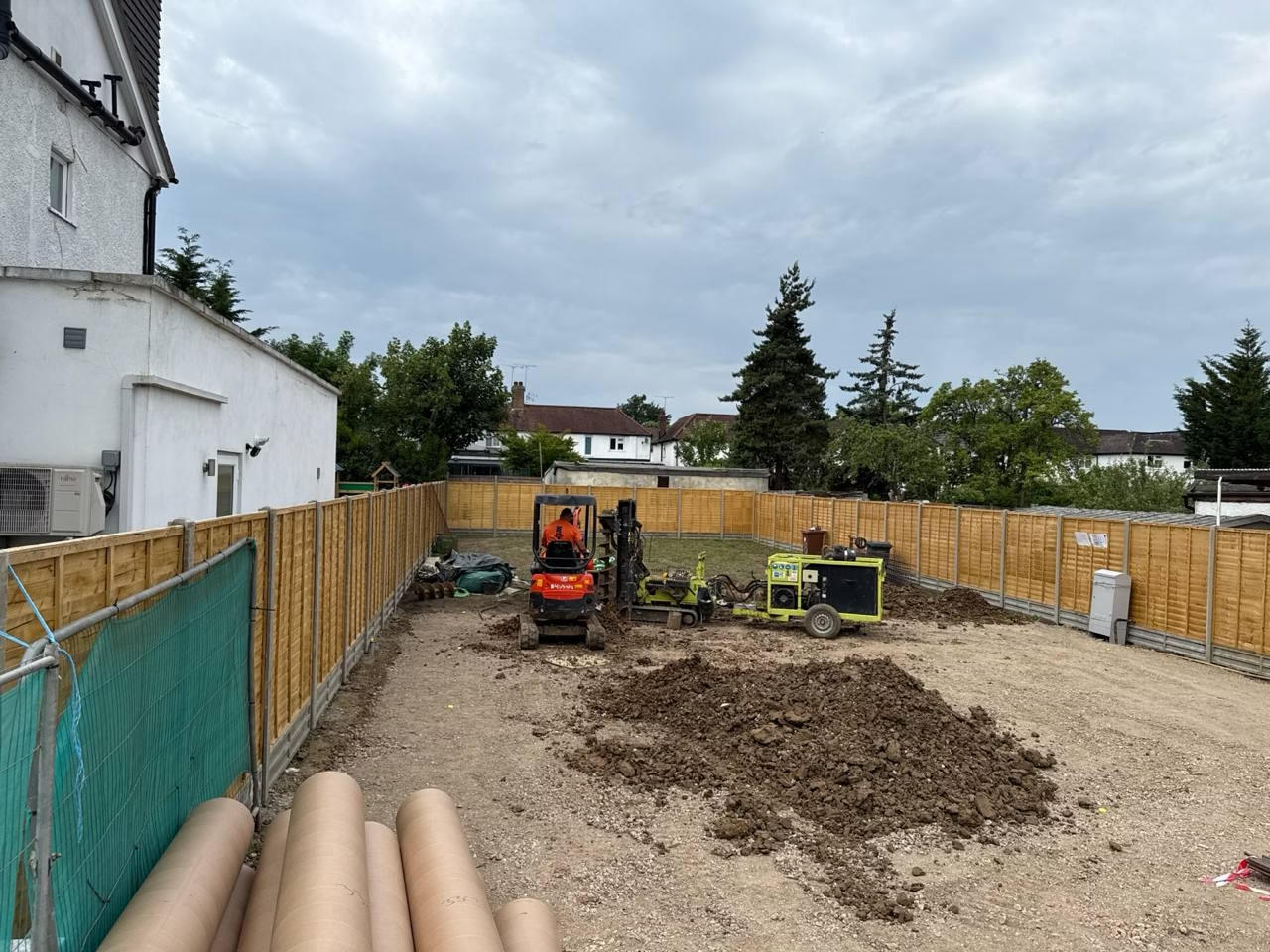
Mini piling
uses compact piling rigs that can operate in tight spaces, including rear gardens, narrow access routes and sites close to neighbouring buildings.
- Suitable for restricted-access sites
- Useful for basements and extensions
- Can work close to existing structures
- Often selected where larger rigs are not practical
2.2 CFA Piling
Commonly used for: larger residential, commercial and low-vibration urban projects.
CFA piling, or Continuous Flight Auger piling, involves drilling into the ground with a continuous auger and placing concrete as the auger is withdrawn. It is often selected where vibration needs to be reduced and the ground conditions are suitable.
- Low vibration compared with driven piling
- Efficient for suitable ground conditions
- Often used on urban construction sites
2.3 Rotary Bored Piling
Commonly used for: deeper foundations, larger loads and more complex ground conditions.
Rotary bored piling
can be suitable where larger-diameter piles or deeper foundations are required. The final method depends on the structural design, soil conditions and access available on site.
2.4 Underpinning
Underpinning
is used to strengthen or stabilise existing foundations. It may be required where a building is being altered, extended, affected by movement, or where basement works are planned close to existing structures.
3. Ground Conditions in London
Ground conditions in London can vary significantly between sites. A proper assessment helps reduce risk and supports better foundation design.
- Made ground – historic fill, demolition material or disturbed ground
- London Clay – common across much of the city and sensitive to moisture changes
- Gravels and sands – variable support depending on density and groundwater
- Obstructions – old foundations, basements, services and buried structures
Additional information:
London soil and piling guide
.
4. The Typical Piling Process
- Initial review – drawings, access, structural requirements and site constraints are assessed.
- Design input – pile depth, size and layout are determined by engineering requirements.
- Site preparation – access, working area, safety measures and logistics are arranged.
- Pile installation – drilling, reinforcement and concreting are carried out according to the chosen method.
- Testing or records – testing, monitoring or installation records may be required depending on the project.
- Ground beams – reinforced concrete beams may be installed to connect the piles and support the structure.
- Building control or engineer review – documentation may be needed for approval and sign-off.
5. Cost of Piling in London
Piling costs depend on the specific requirements of the project. A small extension with good access may be relatively straightforward, while a basement or restricted-access site can require more planning, labour and specialist equipment.
Main cost factors include:
- Pile depth and diameter
- Number of piles required
- Ground conditions
- Access and headroom restrictions
- Concrete, steel and reinforcement requirements
- Ground beams and associated groundworks
- Testing, design and site preparation
Full breakdown:
Piling cost guide UK
.
6. Regulations and Professional Requirements
Foundation works may involve several regulatory and technical requirements depending on the project.
- Building Regulations Part A
- Structural engineer’s calculations
- Eurocode 7 design principles where applicable
- Party Wall Act considerations where neighbouring properties are affected
- Health and safety requirements for construction work
- Building control inspection and approval
7. How to Choose a Piling Contractor
Choosing a piling contractor should not be based only on the lowest price. The quote should be clear about what is included and what may be charged separately.
- Experience with London ground conditions and access constraints
- Clear scope of work
- Appropriate insurance
- Transparent pricing
- Ability to work with engineers, architects and building control
- Relevant project experience
- Good communication before and during the work
8. Why Choose KHB Piling LTD?
KHB Piling LTD provides piling and foundation services across London for domestic and commercial projects. We regularly work on sites where access, neighbouring structures and ground conditions require careful planning.
- Mini piling for restricted-access sites
- CFA piling and bored piling solutions where suitable
- Underpinning and foundation support
- Groundworks and ground beam installation
- Support for homeowners, builders, developers and engineers
9. FAQ
How long does piling take?
The installation period depends on the number of piles, access, ground conditions and associated works. Some small domestic projects may take only a few days, while more complex projects can take longer.
Is piling noisy?
Noise and vibration depend on the piling method used. Mini piling and CFA piling are often chosen on urban sites because they can reduce vibration compared with some driven piling methods.
Do I need a soil investigation?
A soil investigation is often recommended because it helps confirm ground conditions and reduces uncertainty in the foundation design. The need for one depends on the project, site and engineer’s requirements.
Is mini piling suitable for house extensions?
Yes, mini piling is commonly used for house extensions, especially where access is restricted or the existing ground conditions are not suitable for standard foundations.
Can piling be used close to neighbouring properties?
Yes, but it must be planned carefully. The piling method, access, vibration risk, party wall matters and structural design should all be reviewed before work begins.
10. Get a Quote
If you are planning an extension, basement, new build or commercial project, KHB Piling LTD can help assess the most suitable piling method for your site.
Call +44 7821 836407 or
request a quote
.

My name is Kamil, and I specialise in piling services in London. I am dedicated to advancing KHB Piling LTD, a trusted contractor delivering high-quality foundation solutions for both residential and commercial projects. With the expertise and commitment of our team, we provide reliable piling services, including mini piling and CFA piling, tailored to meet the unique requirements of each client.