Piling in London is rarely straightforward. The ground conditions change from street to street, sites are tight, neighbouring buildings are close, and building control expects proper documentation. This page covers the main piling methods we use at KHB Piling LTD, when each one is appropriate, and what to expect if you’re planning a project that needs foundation work.
Why standard foundations often don’t work in London
Strip and pad foundations work fine when the ground near the surface is strong enough to carry the load. In London, that’s often not the case. London Clay dominates most of the city – it shrinks in dry summers and swells in wet winters, which causes seasonal movement in shallow foundations. Made ground from previous development is common in older areas and can’t be relied on for bearing. And in many parts of East London, the ground is loose river gravel that needs piles to get to something stable below.
The other issue is trees. A mature tree within 5–10 metres extracts moisture from the clay over a wide area. Extensions built near trees on clay almost always need piling – strip foundations in that zone will move. See our post on trees, clay and foundation movement for more on this.
Mini piling
The most common method on London residential sites. Small-diameter piles – typically 150mm to 250mm – installed with compact rigs that fit through a standard side passage and work in rear gardens with limited headroom. The piles go deep enough to get below the zone of clay movement and bear on the stiffer material below.
Mini piling is used for extensions, basement support structures, garden rooms, underpinning and any project where the site makes larger equipment impractical. It’s low-vibration and relatively quiet, which matters when you’re working next to an occupied house.
More detail on our mini piling contractors page, including typical depths and pile sizes for London residential work.
CFA piling
Continuous Flight Auger piling is better suited to projects that need larger diameter piles or higher load capacity than mini piling provides. The auger drills continuously while concrete is pumped simultaneously through the hollow stem – it’s a fast method and produces very low vibration. CFA works particularly well in London Clay.
Used on larger residential developments, commercial projects and basement schemes where the structural loads require something more substantial than mini piles.
Rotary bored piling
Rotary bored piling for deeper foundations, harder ground conditions, or where the pile specification requires larger diameters and more controlled installation than CFA allows. Slower than CFA but more adaptable to variable or difficult ground.
Underpinning
Underpinning is required when an existing foundation needs to be strengthened or deepened. Common reasons in London: basement formation, loft conversions that significantly increase loading, subsidence caused by clay movement or tree roots, or alterations to the building that change how loads are distributed.
Underpinning close to a neighbouring property requires careful sequencing and usually triggers party wall obligations. We’re used to working within these constraints.
Groundworks and foundation packages
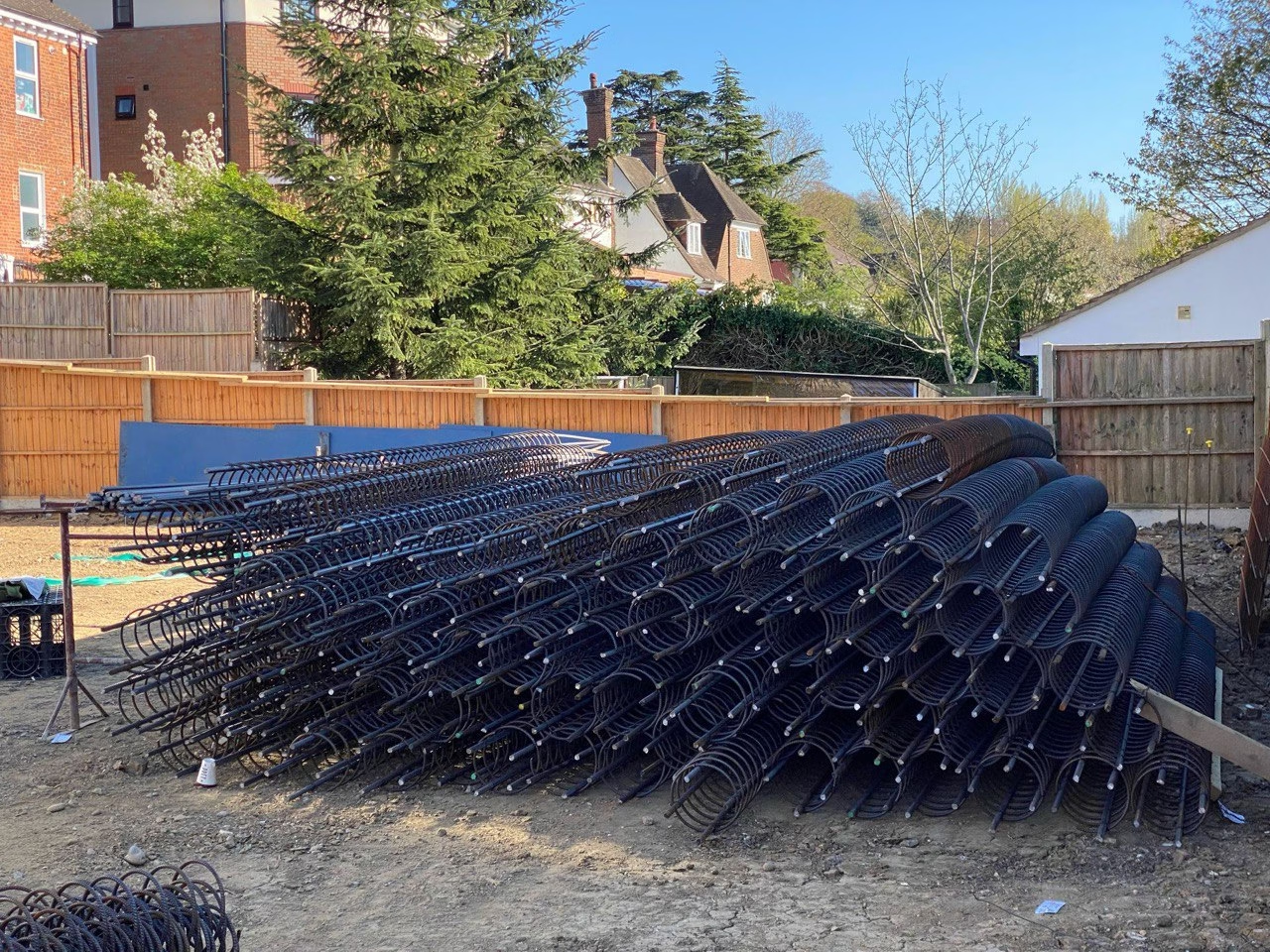
Piles on their own don’t form a complete foundation. You also need pile caps and ground beams to connect the piles and support the walls or columns above. We provide groundworks as part of a complete foundation package – which avoids the coordination issues that come from having separate contractors for piling and groundworks.
Residential projects – what’s involved
Most of our work is on London residential sites. The typical sequence for a house extension:
- Structural engineer produces drawings specifying pile positions, depths, diameters and ground beam layout
- We price based on those drawings
- On site: piles installed, pile caps formed, ground beams poured
- Pile records submitted – building control inspects and signs off
- Extension builder takes over from there
The bit that catches people out is timing. Piling needs to happen before the main build starts, and building control needs to inspect the piles before ground beams are poured. Factor that into your programme.
We work on extensions, loft conversions, new builds, garden rooms and basement construction across London. If you’re at the stage of getting quotes, the structural engineer’s drawings are what we need to price accurately.
Questions about a specific project? Get in touch with the site address and a brief description – or send over drawings if you have them. We’ll advise on the right method and give you a clear quote.
📞 +44 7821 836407

My name is Kamil, and I specialise in piling services in London. I am dedicated to advancing KHB Piling LTD, a trusted contractor delivering high-quality foundation solutions for both residential and commercial projects. With the expertise and commitment of our team, we provide reliable piling services, including mini piling and CFA piling, tailored to meet the unique requirements of each client.