- Kamil
- Mini Piling London
- 0 Comments
In short: screw piles are quick, clean and load-ready on the day they go in – but only when the ground lets them in. Mini piles are slower and messier, yet they cope with the things London ground is full of: old footings, brick rubble, deep clay and tree roots. For most London extensions, the ground investigation decides the answer, not the price per pile.
Homeowners and architects increasingly ask us whether screw piles would be cheaper or faster than mini piles for a rear or side extension. It is a fair question. Screw piles are marketed as the modern, low-mess option, and on the right site they are exactly that. On the wrong site, they turn a two-day foundation job into a redesign. This guide sets out, plainly, where each system works and where it does not.
What each system actually is
Screw piles (also called helical piles) are steel shafts with one or more helical plates welded near the tip. A hydraulic head, usually mounted on a mini excavator, screws them into the ground like a wood screw into timber. Nothing is dug out and no concrete goes into the pile itself. The installation torque gives an on-site indication of capacity.
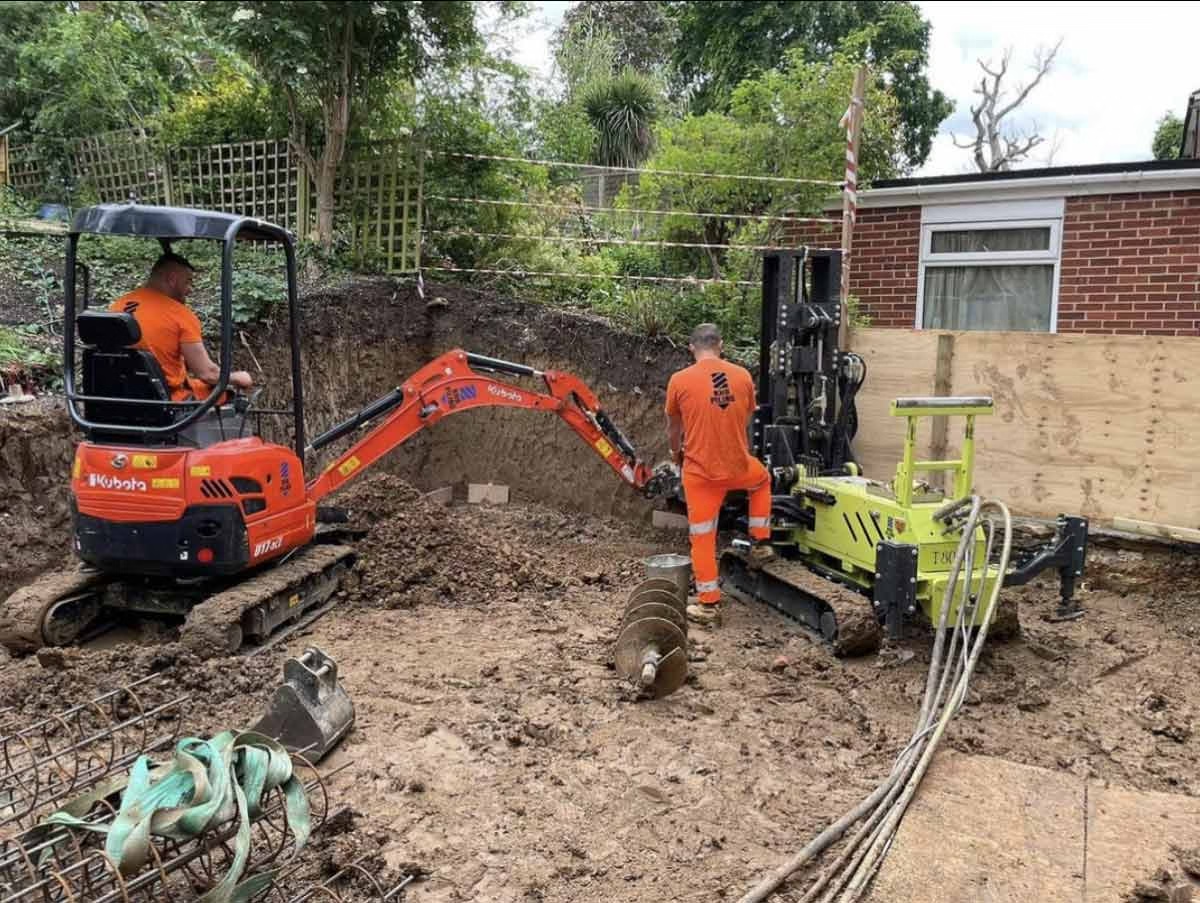
Mini piles are small-diameter piles – typically 150 to 300 mm – formed by a compact rig that can pass through a side passage or, on some sites, through the house. Most residential mini piles in London are bored: the rig augers a hole, a steel reinforcement cage goes in and the shaft is filled with concrete. Driven and CFA variants exist, but the principle is the same: a reinforced concrete column carried down to competent ground.
Screw piles vs mini piles: side by side
| Factor | Screw piles | Mini piles (bored) |
|---|---|---|
| Installation | Screwed in by a hydraulic head | Augered, reinforced and concreted |
| Spoil to remove | None | Yes – bagged or skipped |
| Ready to load | Immediately | After the concrete has gained strength |
| Noise and vibration | Very low | Low |
| Buried obstructions and rubble fill | Poor – plates stall or deflect | Good – the auger can work through most |
| Deep shrinkable clay and trees | Limited by torque and shaft length | Well suited to deeper designs |
| Durability | Steel – corrosion must be designed for | Reinforced concrete |
| Typical sweet spot | Light structures on clean, predictable ground | Extensions, basements and underpinning on typical London sites |
Where screw piles work well
Screw piles earn their place on sites where speed and cleanliness matter and the ground is straightforward:
- Light structures – garden rooms, decks, timber-frame outbuildings and lightweight single-storey extensions.
- Clean, predictable ground – natural soils without old foundations, brick fill or large stones in the upper metres.
- Sites where spoil removal is the real problem – mid-terrace gardens where every bucket of soil has to be carried through the house.
- Programmes that cannot wait – the frame or ground beams can follow on the same day.
Where screw piles struggle in London
London is not a clean-ground city. Most back gardens sit on made ground: demolition rubble, old brick footings, cinders, previous extensions and, in places, Victorian drains. A helical plate cannot cut through a buried wall. When it meets one, the pile refuses short of its design depth, and the engineer has to move the pile, add piles or change the system.
The second issue is clay and trees. Much of London sits on shrinkable London Clay, and where trees are nearby the foundation has to reach below the zone the roots dry out. That can mean considerable depth. Mini piles are routinely designed for this; screw piles are limited by shaft length, torque and the ability to extend safely. We cover the tree problem in detail in Trees, Clay Soil and Foundation Movement in London.
Finally, steel in the ground needs a corrosion strategy. Galvanising and sacrificial steel thickness are normal, but in aggressive or contaminated made ground the design life has to be demonstrated, not assumed. Some lenders, warranty providers and building control bodies will ask for exactly that.
Where mini piles are the safer choice
- Extensions with masonry walls, steel beams or a second storey – higher, less forgiving loads.
- Sites with made ground, old foundations or unknown fill.
- Properties near trees, or where heave protection is required.
- Basements, underpinning and work tight against a neighbour’s wall.
- Projects where the warranty provider or building control wants a conventional, well-documented pile design.
The trade-off is real: mini piling produces spoil, needs concrete deliveries and takes longer before loads go on. On most London sites, that is a price worth paying for certainty. See how we approach it on our mini piling page.
Five questions to settle before you choose
- What is actually in the ground? A trial pit or borehole costs far less than a redesign halfway through installation. See what ground investigations are required before piling.
- What are the loads? Your structural engineer’s figures, not a rule of thumb, decide the pile type and spacing.
- Are there trees within influencing distance? This can change the required depth more than anything else.
- Will building control and your warranty provider accept the system? Ask before you order piles, not after.
- How will capacity be verified? Installation torque records for screw piles; design checks and, where specified, load testing for mini piles.
The honest bottom line
Neither system is better in general. Screw piles are an excellent answer to a narrow question: light loads on clean ground. Mini piles are the dependable answer to the question most London extensions actually ask: moderate loads, variable ground and neighbours close by. If a quote for either system arrives without a ground investigation behind it, treat the price as a guess.
Frequently asked questions
Are screw piles cheaper than mini piles?
Sometimes, on small jobs with clean ground, because there is no concrete, reinforcement or spoil removal. The saving disappears quickly if piles refuse on obstructions and the design has to change. Compare total foundation cost, including ground beams and contingency, not the price per pile.
Are screw piles accepted by building control?
They can be, provided the design is carried out by a competent engineer and supported by calculations and installation records. Always confirm with your building control body and warranty provider at design stage.
Can screw piles be used near trees on clay?
Only if they can reliably reach the depth required below the root-affected zone and the design accounts for heave. On many London sites with mature trees, mini piles are the more practical route.
Which is quicker to install?
Screw piles, usually. They can take load immediately. Mini piles need time for the concrete to gain strength before ground beams are loaded, although the rest of the groundworks often continues in parallel.
Not sure which system suits your site? Send us your drawings and any ground information, and we will tell you straight which approach makes sense – including when mini piling is not the answer. Request a free quote.

My name is Kamil, and I specialise in piling services in London. I am dedicated to advancing KHB Piling LTD, a trusted contractor delivering high-quality foundation solutions for both residential and commercial projects. With the expertise and commitment of our team, we provide reliable piling services, including mini piling and CFA piling, tailored to meet the unique requirements of each client.