- Kamil
- Uncategorized
- 0 Comments
At KHB Piling Ltd, we frequently work on projects where initial plans assumed strip foundations, but site conditions required a more robust solution. This article explains why movement occurs, how trees influence soil behaviour, and when mini piling becomes the correct engineering choice.
Why London soil creates structural risk
Large areas of London are built on shrinkable clay. This type of soil expands when wet and contracts when dry. Over time, these cycles can lead to gradual ground movement, especially under shallow foundations.
The risk increases when combined with:
- tree roots extracting moisture
- poor or mixed ground conditions
- additional building loads
- changes in drainage or water levels
- adjacent excavation or development
This variability makes foundation design more complex than in stable ground conditions.
The impact of trees on foundations
Trees significantly influence foundation performance in clay soils. Their roots absorb water, drying out the soil and causing shrinkage. This can lead to settlement and structural stress.
Typical warning signs:
- cracks in walls and brickwork
- movement around doors and windows
- uneven floors
- separation between structures
Importantly, removing a tree does not always solve the issue. It can cause the opposite effect—soil swelling (heave), which introduces a different type of structural risk.
Limitations of shallow foundations
Strip foundations are commonly used, but they rely heavily on near-surface soil stability. In London, this layer is often the least reliable.
Problems arise when:
- excavation depth becomes excessive
- ground conditions vary across the site
- access limits machinery and efficiency
- adjacent structures restrict excavation
In these cases, piling can reduce risk and improve consistency.
What is mini piling and why it works
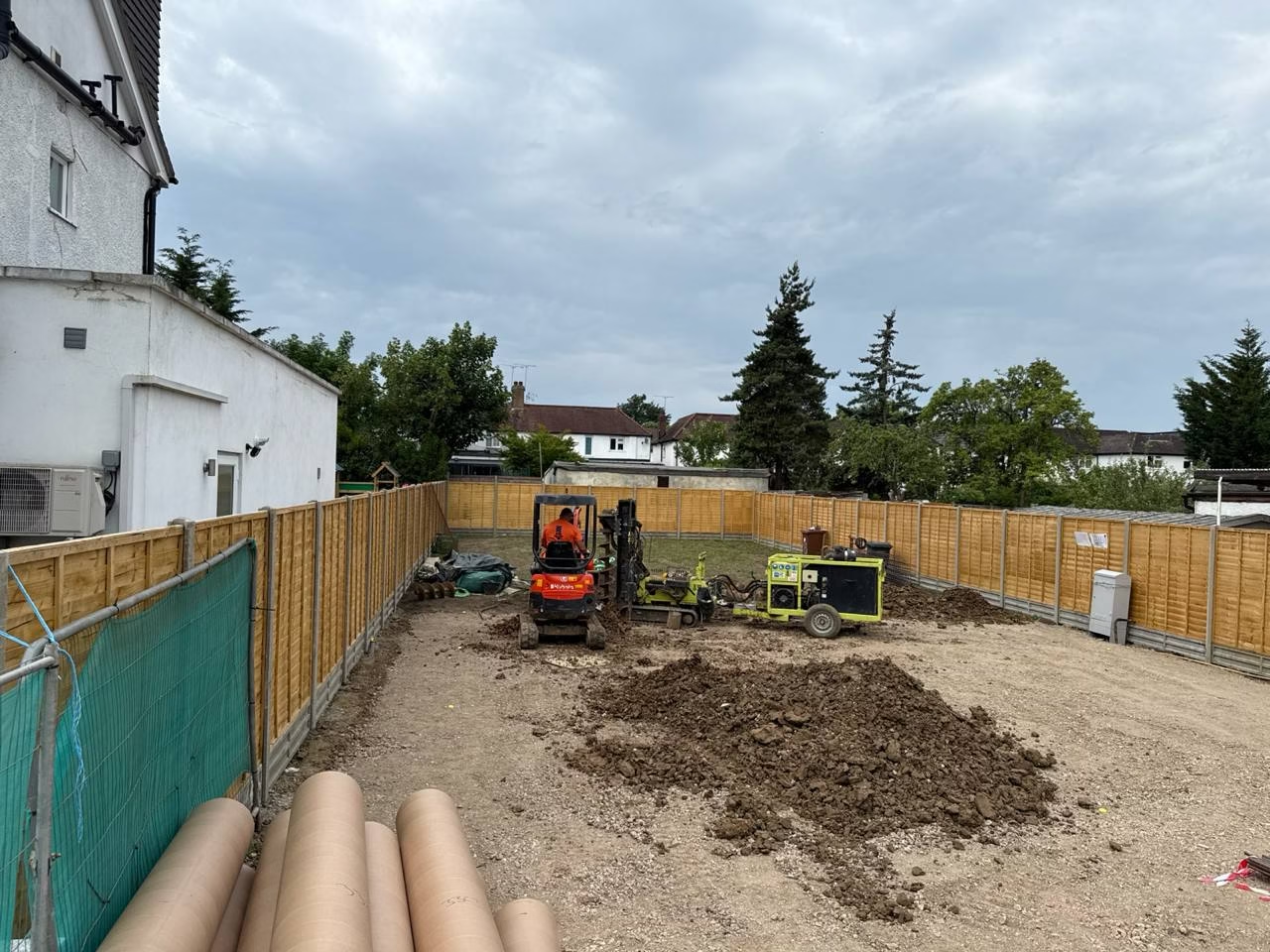
Mini piling is a deep foundation method designed for restricted access and complex ground conditions. It transfers loads to deeper, more stable soil layers, bypassing problematic surface material.
It is commonly used for:
- house extensions
- structural alterations
- underpinning
- basement works
- urban construction sites
Mini piling improves structural reliability while reducing excavation requirements.
Engineering considerations before piling
Before specifying piling, engineers assess:
- soil investigation data
- depth of unstable clay
- tree influence zones
- structural loads
- site access constraints
- proximity to neighbouring buildings
The goal is to design a system that is both structurally sound and practical to install.
Alternative piling methods
Depending on project scale and conditions, other systems may be more suitable:
- CFA piling – efficient for larger loads
- rotary bored piling – flexible for deeper or complex designs
The correct method depends on site-specific requirements, not general assumptions.
Practical example: London extension
On a typical residential extension with nearby trees and clay soil, strip foundations may require deep excavation and still carry risk. Mini piling provides a controlled solution by stabilising the structure independently of surface soil conditions.
Benefits include:
- reduced excavation
- greater load stability
- improved compliance with Building Control
- lower long-term movement risk
Integration with groundworks
Piling must align with broader construction elements such as drainage, slabs, and structural beams. Working with a contractor experienced in both piling and groundworks ensures smoother execution.
Key questions before choosing a foundation
- What are the actual soil conditions?
- Is tree influence properly assessed?
- What depth is required for stability?
- How does access affect installation?
- Is the solution designed for long-term performance?
Conclusion
In London, foundation design must account for clay behaviour, environmental factors, and site constraints. Mini piling is often the most reliable solution where shallow foundations introduce risk.
The correct approach is not about choosing the cheapest option, but the most appropriate one for long-term structural performance.
For expert advice and tailored solutions, contact KHB Piling Ltd.
FAQs
Do trees always cause foundation problems?
Not always, but in clay soil they significantly increase the risk of movement.
Is mini piling suitable for small projects?
Yes, it is widely used for domestic extensions and structural upgrades.
Is piling more expensive?
Initial costs may be higher, but it often reduces long-term risk and unexpected site costs.
How is the right method chosen?
Through soil analysis, structural design, and site constraints.

My name is Kamil, and I specialise in piling services in London. I am dedicated to advancing KHB Piling LTD, a trusted contractor delivering high-quality foundation solutions for both residential and commercial projects. With the expertise and commitment of our team, we provide reliable piling services, including mini piling and CFA piling, tailored to meet the unique requirements of each client.