The History of Piling in London – From Roman Timber Foundations to Modern Engineering
Introduction:
London, a city steeped in history, showcases an architectural timeline that stretches from medieval landmarks to contemporary skyscrapers. Behind this remarkable landscape lies a largely unseen hero: piling. For centuries, piling techniques have quietly supported the city’s most iconic structures. In this article, we explore the evolution of piling in London—from Roman timber piles to today’s advanced systems—and how these methods continue to protect and preserve the capital’s architectural heritage.
The Birth of Piling in London
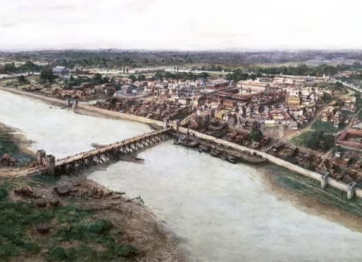
Piling as a construction technique can be traced back to prehistoric settlements, but London’s first advanced piling works emerged during the Roman occupation. Archaeologists have uncovered timber piles from Roman wharves dating back to around 47 AD along the River Thames. These robust foundations helped stabilise riverside structures, demonstrating early engineering insight that would influence London’s development for centuries to come.
Medieval Piling: A Foundation for Growth
As medieval London expanded, builders relied heavily on timber piling to stabilise marshland areas around the Thames Valley. Historical records suggest that significant structures—including the foundations of large stone buildings—were supported by oak piles driven deep into soft riverbed soils. Westminster Abbey (established 960 AD), for example, used timber piles to create a reliable base capable of carrying enormous masonry loads.
The Industrial Revolution: Iron, Steam & Concrete
The 19th century reshaped piling in London. Steam-powered pile drivers enabled deeper foundations at faster rates. Timber was gradually replaced by iron and later steel piles, allowing engineers to build heavier and taller structures.
Iconic projects from this era include:
- The London Underground (1863) – vast sections built on piled foundations to stabilise tunnels and stations.
- Tower Bridge (1894) – supported by more than 70,000 tons of concrete and 11,000 tons of steel.
By the early 20th century, reinforced concrete piles entered mainstream construction, offering unparalleled strength and longevity. This laid the groundwork for London’s high-rise era.
Statistical Impact
- Over 60% of London’s historic buildings rely on some form of piling.
- The London Underground includes 270 stations, many supported by piles over 150 years old.
- Tower Bridge remains one of the city’s most impressive piled structures, combining steel and concrete on a scale revolutionary for its time.
Modern Piling: Preserving the Past, Building the Future
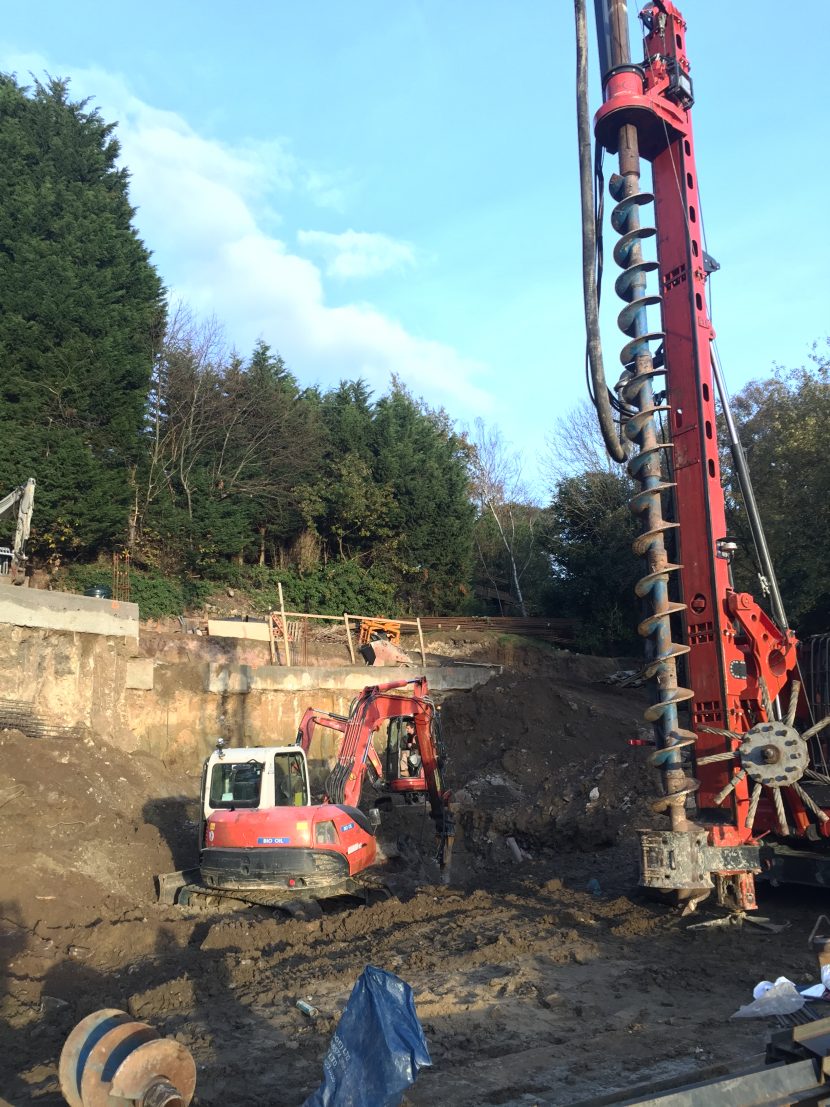
Today, London’s urban density and heritage protection laws make foundation work more challenging than ever. Modern techniques such as mini piling allow engineers to reinforce foundations in tight or sensitive areas without disturbing surrounding structures. This makes mini piling an ideal solution for upgrading historic buildings, stabilising extensions, and protecting London’s architectural legacy.
Fun Facts
- The London Eye stands on 44 concrete piles, each approximately 33 metres long.
- The Gherkin’s foundation includes piles that descend roughly 25 metres—about the height of an eight-storey building.
Conclusion
From Roman timber posts to cutting-edge concrete solutions, piling has shaped London’s architectural evolution for nearly 2,000 years. It provides the structural backbone for both historic treasures and modern landmarks. As the city continues to develop, piling remains essential in connecting London’s rich architectural past with its ambitious future.
About Us
At KHB Piling LTD, we’re proud to contribute to London’s engineering legacy. Our expertise spans mini piling, CFA piling, rotary bored piling and complete foundation design. Contact us today to discuss how our solutions can support your next construction or renovation project.

My name is Kamil, and I specialise in piling services in London. I am dedicated to advancing KHB Piling LTD, a trusted contractor delivering high-quality foundation solutions for both residential and commercial projects. With the expertise and commitment of our team, we provide reliable piling services, including mini piling and CFA piling, tailored to meet the unique requirements of each client.