Most of London sits on clay. Clay moves – it shrinks in dry summers and swells in wet winters, and the range of movement can be significant enough to crack walls, stick doors and eventually compromise a structure. In some parts of the city you also get made ground from previous development, loose river gravels, or variable fill that gives no reliable bearing near the surface. These are the conditions that make piling the standard foundation approach for most London construction projects rather than the exception.
KHB Piling LTD carries out piling and foundation work across London. We work on residential extensions, basement projects, new builds and commercial developments. Below is a straightforward overview of the main methods we use and when each one is appropriate.
Mini piling
The default method for residential work in London. Compact rigs, small-diameter piles (typically 150–250mm), and the ability to work through a standard side passage or in a rear garden. The piles go deep enough to get below the zone of clay movement – usually 4–8 metres depending on the location and tree situation – and bear on the stiffer material below.
Used for extensions, basement support, garden rooms, underpinning, and retaining structures. Low vibration, relatively quiet, and doesn’t require the site access that larger rigs need.
More detail: mini piling in London.
CFA piling
Continuous Flight Auger piling for projects that need larger pile diameters or higher load capacity. The auger drills and concrete is pumped simultaneously – it’s fast and produces minimal vibration. Works particularly well in London Clay. More appropriate for larger residential developments and commercial projects than for a typical single extension.
More detail: CFA piling London.
Underpinning
Required when existing foundations need to be deepened or strengthened. The most common scenarios in London are basement formation, loft conversions that significantly increase loading, and subsidence caused by clay shrinkage or tree root activity. Underpinning close to a boundary usually triggers party wall obligations – worth factoring into the programme early.
More detail: underpinning services London.
Groundworks
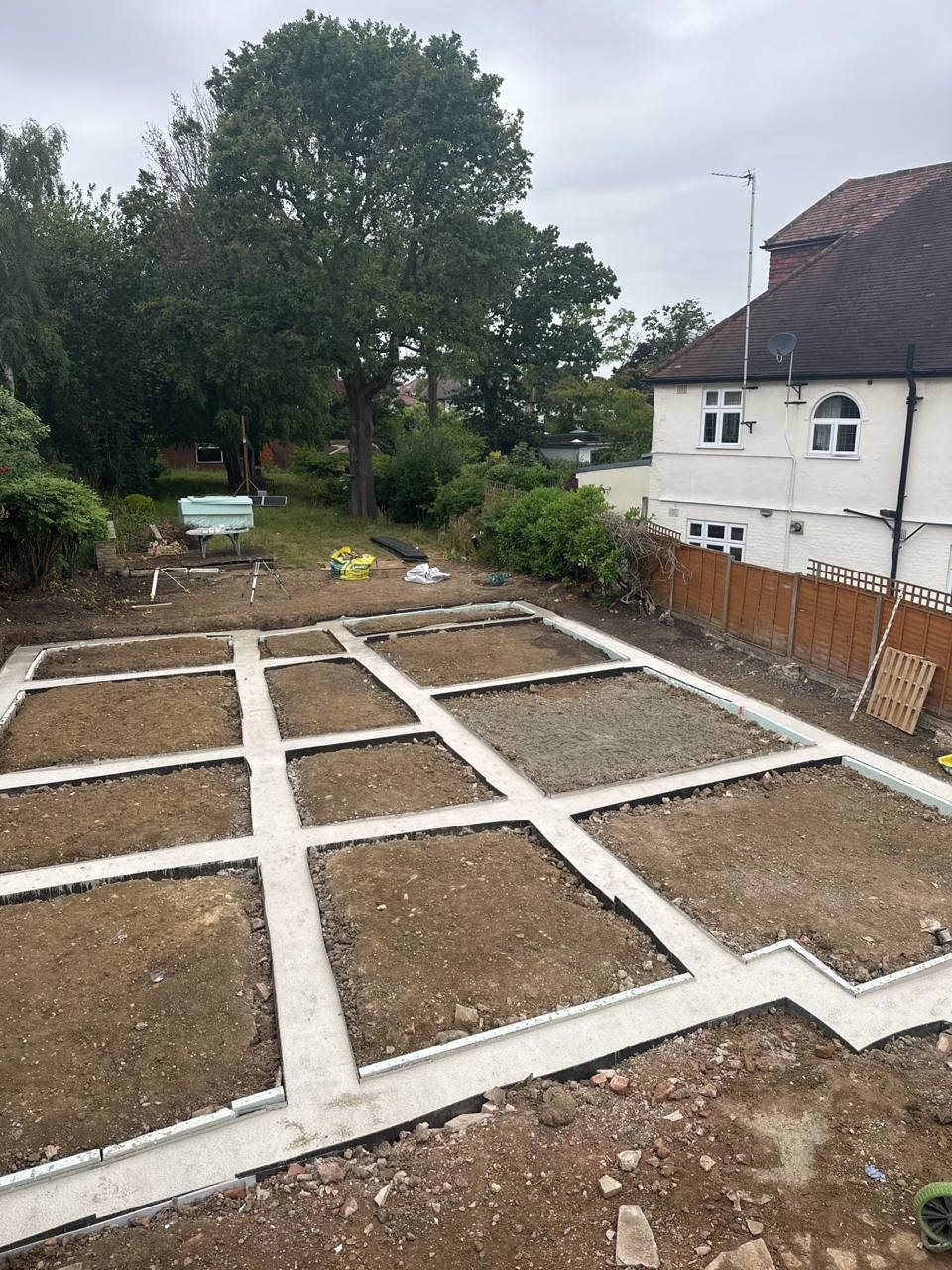
Piles connect to the structure above through pile caps and ground beams. We carry out groundworks as part of a complete foundation package so there’s one contractor responsible for the whole sequence rather than a handoff between separate teams.
Ground investigation
Before finalising pile design, a ground investigation confirms what’s actually there – soil type, groundwater level, depth to competent bearing strata. It removes the guesswork from pile depth and concrete specification, and it’s usually required by building control anyway. We work alongside geotechnical engineers and can advise on what investigation scope is appropriate for a given project.
What to send us if you’re getting quotes
The most useful thing is the structural engineer’s drawings – they’ll show pile positions, specified depths and diameters, and ground beam layout. Without that, we can give you a rough range but not an accurate quote. If you don’t have drawings yet, a site address and description of what you’re building is enough to start a conversation.
Contact us with your project details. We’ll advise on the method and give you a clear, itemised quote.
📞 +44 7821 836407

My name is Kamil, and I specialise in piling services in London. I am dedicated to advancing KHB Piling LTD, a trusted contractor delivering high-quality foundation solutions for both residential and commercial projects. With the expertise and commitment of our team, we provide reliable piling services, including mini piling and CFA piling, tailored to meet the unique requirements of each client.